Top 10 Active Directory Security Risks in 2025 — and How to Fix Them Automatically
May 7, 2025 · 3 min read
The Problem: Top 10 AD Security Risks in 2025
Active Directory (AD) continues to be the identity backbone of over 90% of enterprise environments. But in 2025, it’s more than just a utility — it’s a prime target. Here are the 10 most exploited risks security teams must confront:
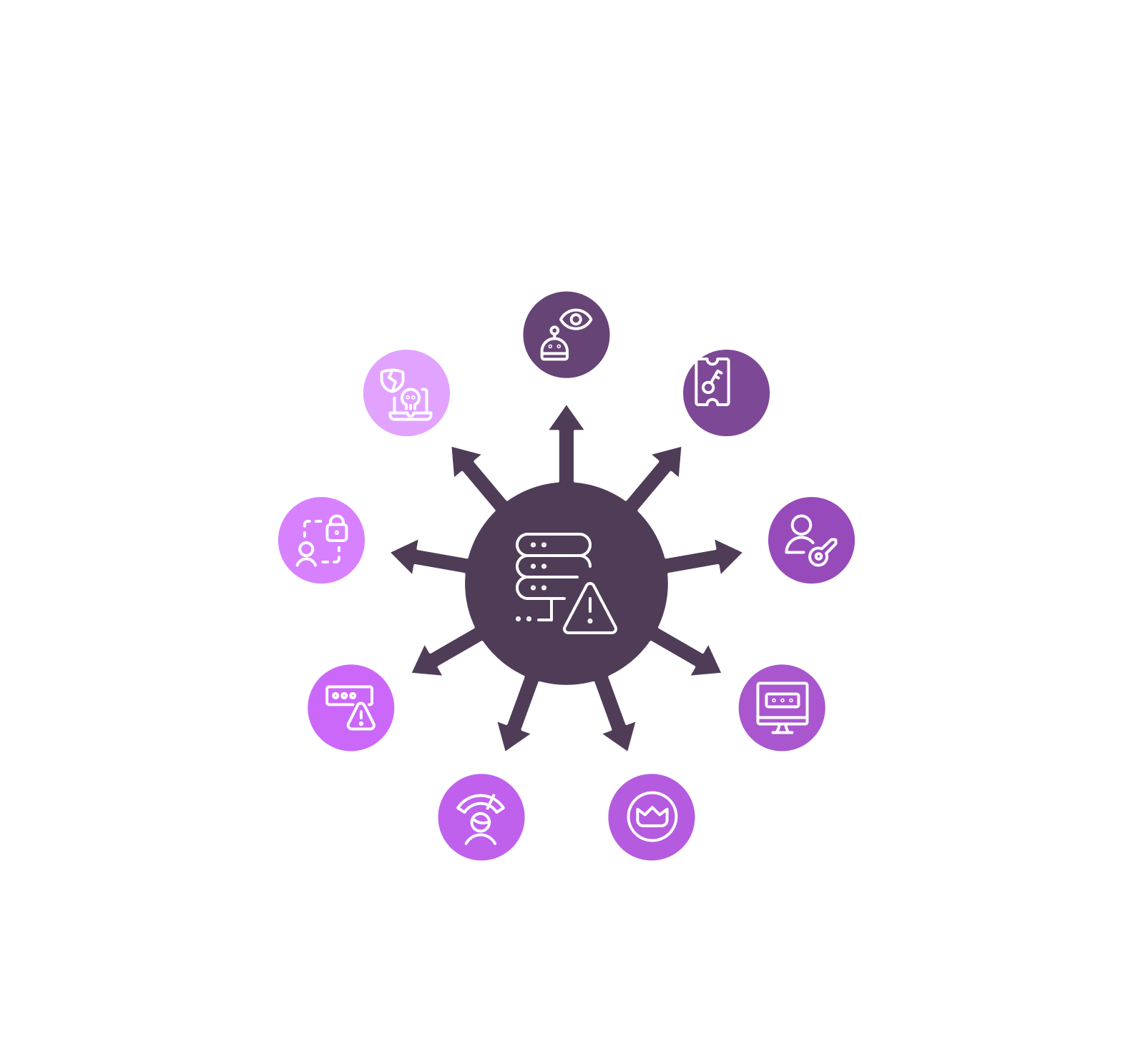
- Unconstrained Delegation – Enables attackers to impersonate systems and access sensitive services.
- Kerberoasting – Allows credential extraction from service tickets, often using weak encryption.
- Password Reuse & Weak Credentials – Compromised user accounts fuel lateral movement.
- No MFA for Admins – Remote admin logins without MFA are still common, despite known risks.
- Overprivileged Accounts – Domain and enterprise admin roles assigned unnecessarily.
- Stale or Orphaned Accounts – Inactive accounts often go undetected and unmonitored.
- Misconfigured ACLs (Access Control Lists) – Lead to privilege escalation and persistence.
- Hybrid Trust Mismanagement – Insecure AD-to-Entra ID (Azure AD) connections expand attack surfaces.
- Lack of Backup and Restore – A successful ransomware attack can paralyze operations without AD recovery.
- No Attack Path Visibility – Most orgs still have no insight into lateral movement routes.
When Risk Meets Reality: A Story of Stats and Consequences
In early 2024, a healthcare provider in the US suffered a ransomware attack that took down their entire Active Directory environment. Investigators discovered that attackers leveraged Kerberoasting and unconstrained delegation, escalating privileges within 4 hours. The organization had no AD backups, resulting in six days of outage and millions in losses.
Unfortunately, this isn’t rare. According to the Sophos Active Adversary Report, 73% of ransomware attacks now involve Active Directory manipulation, and 90% of enterprises have critical misconfigurations in their domain. Mandiant’s data confirms that privilege escalation happens in less than a workday in the majority of breaches.
The business impact is severe:
- Financial Losses: Ransom payments, regulatory fines, and recovery costs
- Reputation Damage: Customers and partners lose trust after multi-day outages
- Compliance Failures: GDPR, HIPAA, and SOC 2 violations due to poor identity hygiene
- Operational Chaos: No authentication means no access to core systems or apps
The message is clear: identity is the new endpoint, and Active Directory is the kill switch.
Risk Mitigation: What Smart Organizations Are Doing
To reduce their exposure and increase resilience, leading security teams are implementing the following:
- AD Security Baselines – Run continuous audits for risky configurations (e.g., delegation, DCSync rights).
- Attack Path Analysis – Use automation tools to identify high-risk privilege escalation paths.
- MFA Everywhere – Especially for domain admins and remote access users.
- Privileged Access Management (PAM) – Enforce tiered access and remove persistent elevated roles.
- Automated Backup & Recovery – Ensure domain controllers and objects are recoverable.
- Credential Intelligence – Monitor the dark web and breach forums for leaked credentials.
- Security Awareness Training – Educate users on phishing and credential security.
However, manual execution of these strategies takes time and skilled staff — both in short supply.
How Automation Changes the Game
That’s where Dela IEM, SaaS-based Identity Exposure Management Platform comes in — delivering end-to-end protection with speed and simplicity:
- Fix in Seconds: Automatically remediate AD and Entra ID misconfigurations with one click
- Attack Path Analysis Built-In: Visualize and neutralize lateral movement vectors in real time
- Identity Intelligence Engine: Continuously scan for leaked credentials and trigger incident playbooks
- Built-In AD Backup & Restore: Rapid rollback capabilities for ransomware or human error recovery
Active Directory won’t secure itself. But with automation, you don’t have to do it alone.
Let us show you how you can reduce Mean Time to Remediate (MTTR) from days to seconds — and secure your identity backbone before attackers do.