Why Attackers Succeed Most of the Time: A Combo of a Good Recipe and Blind Spots
April 11, 2025 · 3 min read
Chapter 1. A Good Recipe for A Disaster: A Wider Window for Damage
MTTR measures how quickly a company detects, contains, and remediates a breach. The longer it takes, the more time attackers have to escalate and exploit.
- In Practice:
- Medibank attackers operated for weeks, extracting 9.7 million records because detection lagged. A shorter MTTR could have limited the breach to a fraction of that.
- MGM Resorts saw ransomware spread widely due to a delayed response, costing ~$100 million. Faster containment might have saved millions.
- Microsoft hackers roamed systems for months, stealing sensitive emails. Quick detection could have blocked their access early.
- Why It Matters: IBM’s 2024 Cost of a Data Breach report shows that breaches withMTTR over 200 days cost 30% more than those under 100 days. Every hour counts.
Chapter 2. Blind to The Blindspot
Without monitoring dark web marketplaces or breach databases, companies miss compromised credentials circulating online. Attackers exploit these for easy entry.
- In Practice:
- Medibank likely missed a leaked credential from a prior breach, allowing attackers to slip in. Dark web monitoring could have flagged it for a password reset.
- Microsoft fell to password spraying because weak accounts weren’t identified. Credential leak tracking might have enforced MFA sooner.
- MGM Resorts attackers used stolen credentials, undetected due to poor visibility, to launch their ransomware campaign.
- Why It Matters: CyberArk’s 2024 survey noted a 20% rise in dark web access broker ads in 2023, selling credentials from breaches. Unmonitored leaks are an open door.
The Deadly Combo
Longer MTTR and lack of visibility create a perfect storm. Attackers enter via leaked credentials (undetected due to poor threat intelligence) and exploit Identity Provider’s weaknesses (undeterred by slow response). Real-world cases like MGM, Medibank, and Microsoft show this pattern in action, turning small breaches into catastrophes.
These two critical weaknesses are amplifying attacks: longer Mean Time to Respond (MTTR) and lack of visibility into leaked accounts.
How to Fight Back
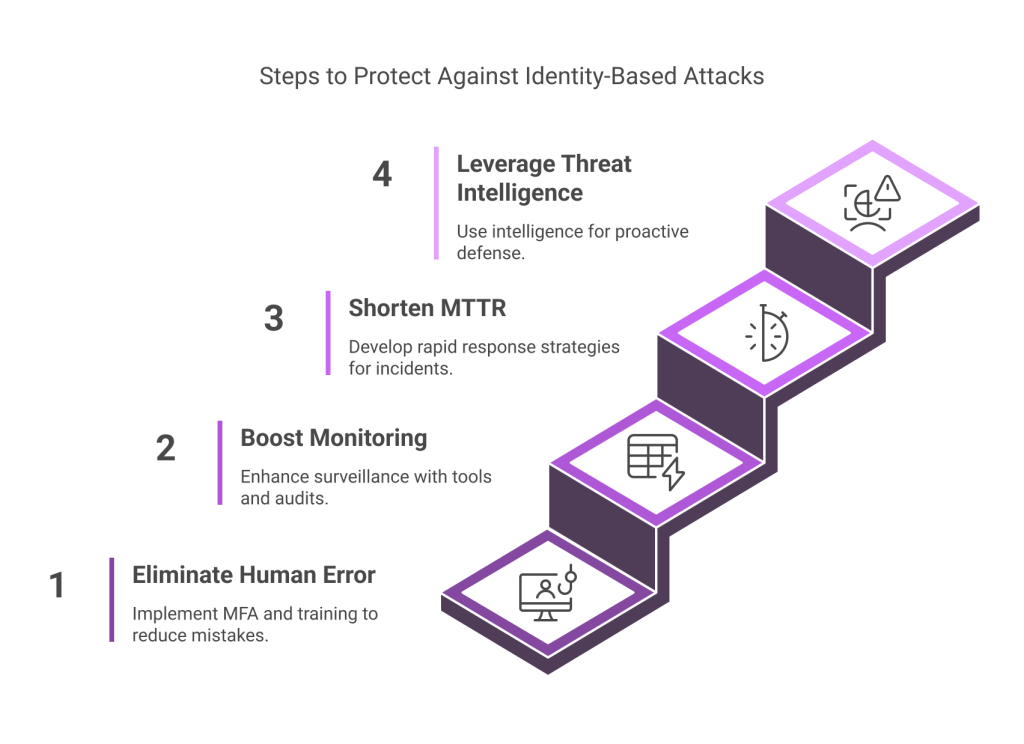
To protect against identity-based attacks, businesses must act decisively. Here are actionable steps:
- Eliminate Human Error:
- Enforce MFA across all accounts, prioritizing phishing-resistant options like FIDO2.
- Use password managers to prevent reuse and enforce strong, unique passwords.
- Train employees to spot phishing attempts, like fake IT support emails.
- Boost Monitoring:
- Deploy dark web scanners (e.g., Have I Been Pwned) to track leaked credentials.
- Use SIEM tools for real-time login anomaly detection.
- Audit Identity manager’s configurations regularly to catch missteps like over-permissive roles.
- Shorten MTTR:
- Create incident response playbooks for identity breaches.
- Automate containment, like locking accounts on suspicious activity.
- Conduct tabletop exercises to practice rapid response.
- Leverage Threat Intelligence:
- Subscribe to services tracking credential leaks and Identity exposures.
- Integrate threat feeds into security tools for proactive defense.
OR
- Simply subscribe to Dela IEM. It helps you to deploy all of the above, automatically!
The Bottom Line
Insecure identities—whether from your identity provider’s vulnerabilities or leaked accounts—are a goldmine for attackers. Longer MTTR and lack of visibility into leaked credentials turn small mistakes into enterprise-wide disasters.
Don’t let your organization be the next headline. Strengthen your identity security today—enforce MFA, monitor leaks, and act fast. The cost of inaction is far higher than the investment in prevention.
Have questions or need help securing your identity systems? Contact our cybersecurity experts for a consultation! Go to: https://delasecurity.com/delasecurity.com and try it out to see the amazing results for yourself.